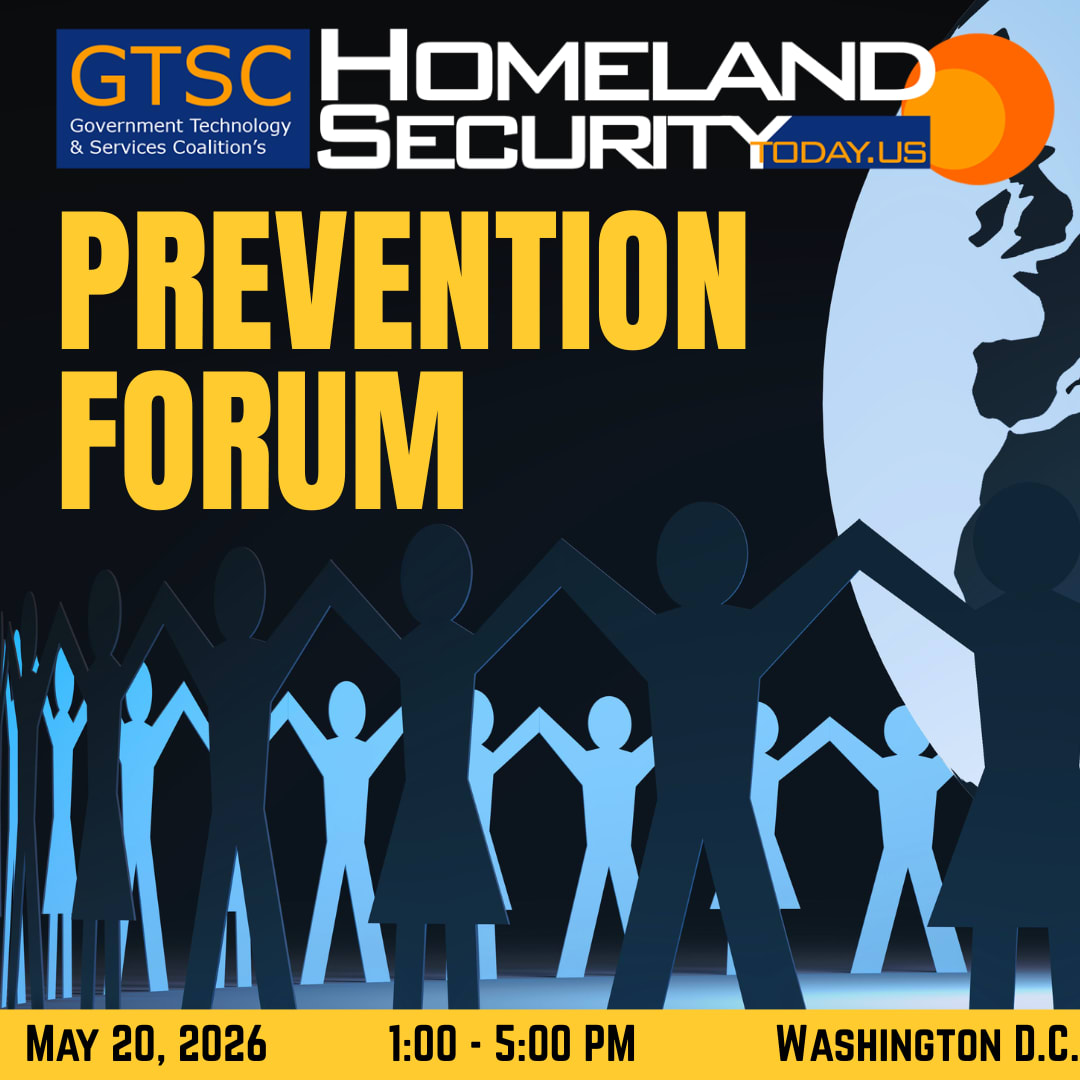
HSToday's Inaugural Terrorism Prevention Forum
Wednesday, May 20, 2026 (1:00 PM - 5:00 PM) (EDT)
Description
Hosted in partnership with American University, HSToday will bring together leaders from government, law enforcement, academia, and civil society to examine the evolving landscape of prevention and highlight innovative, real-world approaches to stopping threats before they emerge.
We will discuss the state of prevention efforts, cutting-edge practices in the field, and the growing role of technology and community-based strategies in building resilience and enhancing public safety.
Opening Remarks: The State of Prevention
Steven Driscoll, M.Ed, Assistant Chief, National Threat Assessment Center, U.S. Secret Service
This session will briefly describe the update on existing prevention programs at the federal, state, and local governmental level, and NTAC and partner resources available to all.
Cutting-Edge Prevention in Practice
Hala Furst, Director for Strategic Partnerships, Polarization & Extremism Research & Innovation Lab (PERIL)
Dr. Emma Cardeli, Attending Psychologist & Research Associate, Trauma & Community Resilience Center, Boston Children’s Hospital; Assistant Professor, Psychology Harvard Medical School
Kaitlyn Tierney, Co-Founder, Diverting Hate
Effective prevention solutions can and should come from a variety of perspectives. Learn about innovative approaches from state government, civil society, clinicians, and the private sector
Keynote: Collecting and Connecting the Dots for First Preventers
Rick Shaw, CEO and Founder, Awareity; HSToday 2025 Excellence in Prevention Winner
Online Harms and Prevention Solutions
Matthew Kriner, Executive Director, Institute for Countering Digital Extremism; Managing Director, Accelerationism Research Consortium (ARC)
Christine German, PhD Candidate, Political Science Program Manager, Polarization and Extremism Research and Innovation Lab (PERIL) American University
Neil Saul, Associate Director, Prevention Practitioners Network Eradicate Hate
Within an overwhelming and often toxic online environment, these trailblazing solutions increase resilience against future threats in individuals before they are exposed to online harms, and support individuals already at-risk and in need of an intervention.
Closing Keynote: What Have We Learned and Where are We Going?
Bill Braniff, Editor-At-Large, Prevention, Homeland Security Today; Executive Director of the Polarization and Extremism Research and Innovation Lab, American University; Former Director, Center for Prevention Programs and Partnerships (CP3), U.S. Department of Homeland Security
In partnership with:

Mary Graydon Center 305 & 306 4400 Massachusetts Ave NW
Washington D.C., 20016